Robertas Danielianas on AI, Reputation and Building Sales Teams
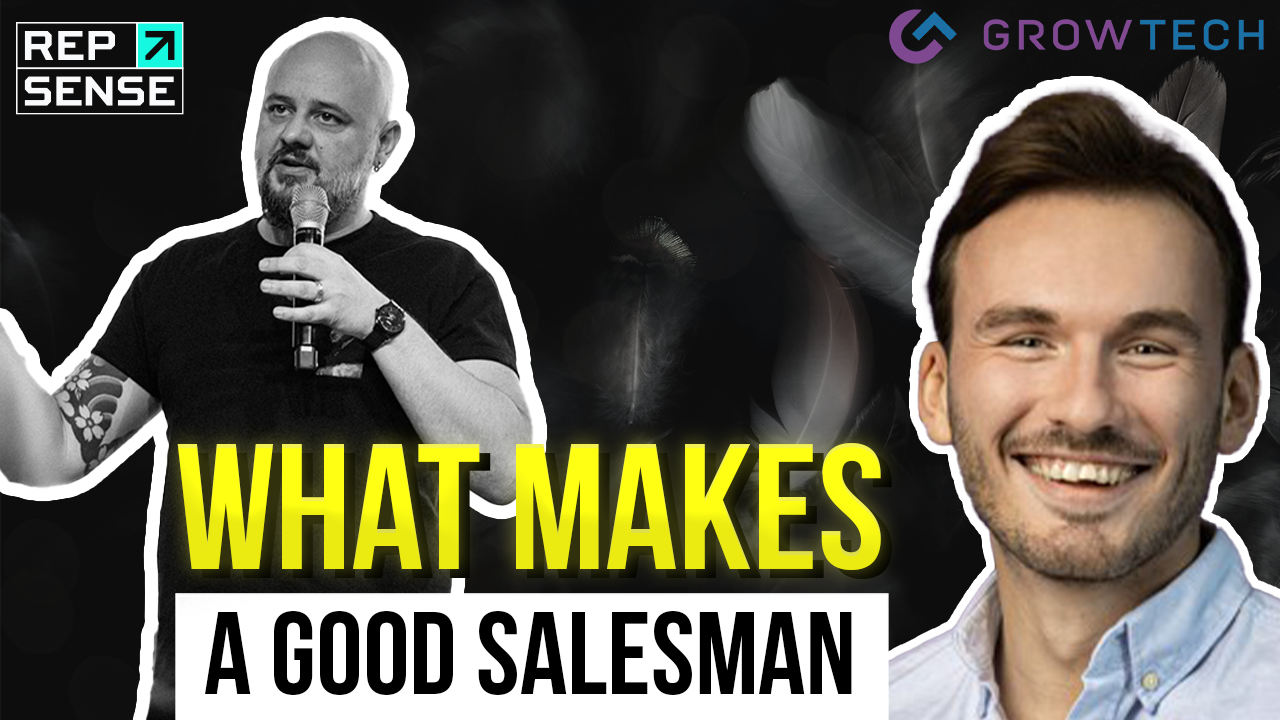
“Sales is not something someone chooses you know like in kindergarten thinking about hey I want to be a salesman.”
That line from Robertas Danielianas sets the tone for his whole story. You do not wake up destined to sell. You stumble into it. If it clicks, you stay. If it does not, the job spits you out quickly.
In this episode of Startup Sales Talks, Robertas, cofounder and Chief Revenue Officer of Repsense, breaks down twenty plus years of selling, managing teams and now building a data driven reputation analytics startup. This blog pulls out the most useful ideas and quotes for founders and sales leaders who want fewer vibes and more signal in how they run revenue.
From Yellow Pages to AI startup
Robertas did not start in a polished SaaS office. He started with a phone and the Yellow Pages.
“My first job was very interesting. Sit down, here is the phone number, here is the Yellow Pages, here is a sheet of paper with costs per square inch. Please start calling and show us what you can do.”
No onboarding. No scripts. Just pure hustle and commission based pay where “ninety five percent of my salary if not more” depended on performance.
From there he moved through big corporates, then international work with companies like Ikea and Mars, then into gaming, then into tech startups and finally into cofounding Repsense, an AI driven reputation analytics company.
The interesting part is what stayed constant through all those jumps.
- Treating sales like a series of experiments
- Obsession with process and data
- Deep respect for the human side of selling
Why sales needs experiments, not heroics
Robertas is very clear. Hero salesperson myths are useless. What works is a scientific mindset.
“Every action should be taken as an experiment.”
Instead of vague campaigns, he thinks in initiatives with clear success and failure criteria. For example, opening a new country:
- Break the market into industries
- Split leads for A B testing
- Test language choice in outreach
- Decide success metrics before you start
- Iterate through many versions
“To open up one country you might need one hundred different outreach scenarios,” he says. That sounds heavy, but the upside is huge. You move from “below one percent response rates to like ten percent response rate” by measuring and adjusting instead of guessing.
The shift that made this possible was tooling. Early CRMs were useless for this because nobody wanted to type every call and email manually. Once CRMs integrated with email and calling tools, data became real.
“Then you really do not even need to punch in the phone number. You just click. You do not need to log the conversation. Then you can start to actually optimize.”
The principle is simple. Automate logging. Measure everything. Treat campaigns as experiments with an end date and a kill switch.
Managing sales people is not about cloning yourself
One of the hardest transitions in sales is moving from individual contributor to team leader. Robertas is painfully honest about that.
“I struggled with that a lot. If you are successful at sales you want to clone yourself. Unfortunately that is not how the world works.”
When he tried two extreme approaches, both half failed.
- Approach one
- “Everybody can be self reliant and independent, you just bring me your plans and execute.”
- Half the team loved it. Half were stressed out.
- Approach two
- “Now I am telling everyone what to do.”
- Again, half happy, half miserable.
The solution was messy but real. Stop trying to force one style. Give people space to design their own experiments inside a shared framework.
“You really need to create an environment where you can do experiments and measure and allow people to do experiments and measure.”
He also stresses that you do most of the real management work at the hiring stage.
“When you are assembling your team of superheroes you actually do most of the work during that time. Do not be complacent. Especially in revenue. Maybe you feel pressure to hire fast. Do not do this mistake.”
Hiring sales people in the age of ChatGPT
Robertas has a very 2025 view on hiring tasks.
All those classic assignments like “write a cold email” or “craft a sequence”
He thinks they are mostly dead.
“With ChatGPT available you do not need that.”
Instead, he focuses on getting candidates to talk deeply about real situations.
“What you need to do is get people talking about their successes and failures. You can see if they are faking it.”
Then comes the part many managers avoid personal improvement plans.
If someone is underperforming, he sits down and builds a personal improvement plan with them.
- Clear, measurable targets
- Concrete actions
- Joint ownership
“I had people who actually found it very helpful and became good. And I had people who after three months said I know I failed and I understand you need to let me go.”
You are not waiting passively for them to magically start closing.
“You are waiting for them to start doing measurable output. Do the calls, do the research, approach the leads, create the sequences, optimize.”
If those inputs are weak and do not improve, you have your answer.
How to survive rejection without spiraling
If you stay in sales long enough, rejection stops being an event and becomes a constant background noise. Robertas has felt both sides.
“When I was young and handsome and full of myself I really did not care. I felt untouchable. But then you get ground down bit by bit.”
The danger is the vicious cycle.
- You lose a big deal
- You feel terrible
- You stop doing activities
- Your pipeline dries up
- You start clinging to the last few deals
- You smell desperate, which kills more deals
The way out is surprisingly boring.
“Create very small achievable goals. Break down into very small steps and achieve them.”
He suggests things like
- Send ten emails
- Make five calls
- Test one new subject line
They are not heroic. They are not glamorous. But they give you small wins and rebuild momentum.
“Maybe getting a meeting is enough for this week to get better.”
The key is counterintuitive.
“Every time you lose a big deal your first reaction is I am not going to do it anymore. Instead it should be do three more emails, do three more calls.”
Reputation as the real first touchpoint
One of the strongest parts of the conversation is how Robertas connects sales with reputation and search.
“75% of B2B buyers actually do research on Google before they buy a product.”
By the time a prospect talks to sales, they have seen your search results, your site, your social profiles and maybe reviews or media coverage. That whole page of links is your real business card.
“I want it not to be the last. I want people to look at it and just from seeing that list of links feel confident this is a really good company.”
If someone meets you at a conference, then searches your brand and finds only Lithuanian language content or old articles that do not match your positioning, you just lost trust.
So he treats reputation like B2C brands do.
- Own your branded search results
- Think about what the page looks like to a cold buyer
- Measure share of search and what he calls a reputation index
“Share of search really represents your market share and your online reputation. We see a lot of things that slip through the fingers.”
In other words, you cannot just cold outbound your way out of a bad search presence anymore.
Channels That Still Work and Why Live Events Matter
Are email, cold call and LinkedIn dead
“No. Everything works. You just need to know which industry is more susceptible to which channel.”
For old school industries like banking or due diligence, he believes phones and in person still have huge impact.
“For that kind of client I think calling is very good or even going and joining a country club somewhere, meeting those people directly.”
For younger tech companies you lean more into content, performance marketing and digital communities.
But if he had to pick one underrated lever, it is simple
“Go to live events.”
He does not romanticize it.
“At conferences I start planning three months in advance. I book meetings. During the day I have one type of meeting. Then at night I go to all the dinners, all the events, all the hotels at three in the morning. I meet people, drink, talk, get to know them.”
You do that for three days and you come home with warm relationships, not just email addresses.
“If you are really feeling down and want fast results, go to an event and talk to people. At least you will feel that you did something useful instead of looking at emails not being replied to.”
AI in sales is a tool, not a miracle
Given Repsense builds on machine learning and data science, it is natural to ask how AI changes sales.
Robertas is optimistic but not naive.
“We have so many tools to automate everything that the only thing we need to do is actually put in the work. Use them to be one person that can do ten people’s job.”
AI helps with
- Research
- Content drafts
- Summaries
- Repetitive tasks
But it does not replace the hard parts
- Owning experiments
- Handling emotions
- Building trust
- Having real conversations
You still need humans who can think, decide, commit and care.
Final thoughts
Robertas’s story is not a shiny overnight success. It is twenty plus years of trial, error and adaptation condensed into a few key ideas
- Sales is not a childhood dream. It is a craft you grow into.
- Experiments beat opinions. Measure inputs and outputs relentlessly.
- Hiring is about character and accountability more than perfect assignments.
- Rejection never disappears. You just get better systems to move through it.
- Reputation is now the real first meeting. Your search page is your business card.
- AI lets you do more, faster, but it does not do the work for you.
And maybe the most important line of all
“Whatever makes you feel invincible that day, use it. Then go and do the boring tasks.”
That is the real lever in modern sales.