Edvin Vosylius: Recruiting and Building Sales Team in Startups
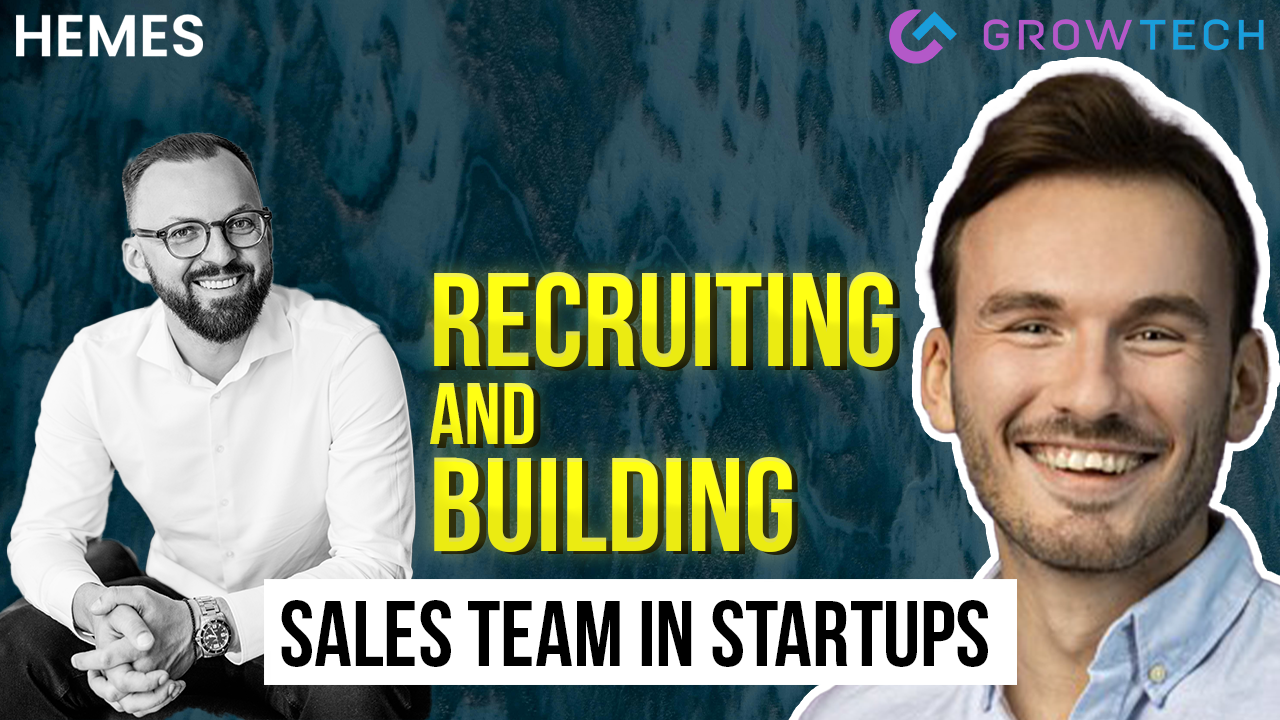
Lessons from 16 years in sales with Edvin Vosylius, Founder of Hemes
Most founders dream about sales. Few actually build a sales team that works.
You raise some money, ship a product, close a few founder led deals. Then reality hits. You need more pipeline. More calls. More revenue.
So you open LinkedIn, post a job, talk to a couple of candidates, pray, and hope the person you just hired will magically
• create a process
• book meetings
• close deals
• and not burn half your runway
They usually do not.
In episode seven of Startup Sales Talks, Dom sat down with Edvin Vosylius, founder of sales recruiting agency Hemes and former sales leader at Deeper, Whatagraph, Favro and others. He has spent over sixteen years in sales roles, from individual contributor to Chief Sales Officer.
In other words, he has been the person
• building sales teams with no brand
• scaling from three reps to twenty plus
• and later, headhunting salespeople for other founders
This post distills his practical, no nonsense playbook for recruiting and building a sales team in startups.
The uncomfortable truth about startup sales hiring
Edvin’s starting point is simple.
Most early stage founders do sales hiring completely wrong.
They do it in the background while juggling ten other priorities. They listen to standard recruiter talk. They copy job descriptions from scale ups that look impressive but have nothing to do with their stage.
And then they are surprised when
• ramp is slow
• pipeline is thin
• and the first sales hire is quietly let go after six months
Edvin’s view
At an early stage, your assumptions will not work. You need people who can create a process, not just follow one.
So let us walk through how he would approach it, step by step.
Step one: treat hiring like fundraising
When founders fundraise, they know they need focus. For a month, sometimes two, everything becomes
• call with investors
• follow up
• pitch iterations
Edvin recommends using the same mindset for early sales hiring.
Instead of
• half doing hiring for three months
• sprinkling interviews between product calls
• and letting candidates sit in your inbox
Do this
- Pick a focused time window
- Decide that for the next two or three weeks, sales hiring is one of your top priorities. Not a side quest.
- Go loud about it
- Tell your network, your portfolio, your advisors, your old colleagues. The best early sales people often come from
- warm intros
- friends of friends
- people who already know your market
- Make fast decisions
- Candidates who are good have options. Dragging a process for two months is a nice way to lose the ones who could actually help you.
Focused hiring saves something more important than money. It saves time. And in a startup, time is the only currency that really matters.
Who you actually need as first sales hires
The mistake Edvin sees all the time
Founders hire someone from a big logo, with shiny titles, impressive slides, and pre built processes behind them.
Put that person into a messy, pre product market fit startup, and they often fall apart.
At the beginning, you are not buying pipeline. You are buying problem solving in chaos.
According to Edvin, your first sales hires must be
Builders, not operators
People who can
- create a sequence from zero
- test messaging
- figure out which channel actually works for your product
If they constantly ask
“Where is the script, where is the playbook, where is the process”
you have the wrong person.
Flexible and comfortable being wrong
- Your first ICP guesses will be wrong. Your pricing will change. Your pitch will evolve.
- You need someone who can say
- “Ok, that did not work, let us change it tomorrow”
- not someone who gets stuck defending a plan.
Truly performance driven
- Early stage is not about looking busy. It is about
- calls booked
- deals moved forward
- learnings collected
- You want people who ask about goals, numbers, impact, not just perks and titles.
And if you can, Edvin strongly recommends hiring people you have already worked with.
You have tested them in the real world, not just in an interview room. That is worth far more than a perfect CV.
Passion versus experience: what wins in a startup
There is always this tension
• Candidate A has ten years in your industry, polished, safe, but not very hungry
• Candidate B has two years, eyes are on fire, clearly obsessed, but light on resume
Edvin’s view is very clear.
At a mature company, you might pick experience.
At an early stage startup, passion wins, almost every time.
Why
Because you can teach techniques. You cannot teach hunger.
He put it simply
It is much easier to slow down someone than to speed them up.
A hungry rep who sends too many messages can be coached on quality.
A comfortable rep who is slow, passive, and risk averse is almost impossible to turn into a builder.
So in the early stage, pick the ones who
• keep pushing for responsibility
• bring you new ideas unprompted
• ask for higher goals, not lower ones
Then help them build the missing skills.
The founder still has to sell, and be a “playing coach”
A common pattern Edvin sees
• Founder hires first AE or SDR
• Hands them HubSpot or Pipedrive
• Hopes they will “figure it out”
• Disappears into product and fundraising
Six months later, everyone is frustrated.
His stance
As a head of sales or founder, you still need to sell. You need to be a playing coach.
What that means in practice
Join live deals
Not every deal, but the important ones.
Use them to
- unblock complex situations
- show how you handle objections
- model good discovery
Take responsibility when things are stuck
Nothing builds respect like a leader who can jump in and
- revive a stalled account
- close a difficult negotiation
- or give a big opportunity to a rep who is just under target
Do the unglamorous work sometimes
Yes, at times you should still
- cold call
- send sequences
- join early stage discovery calls
Not because you do not trust the team, but because you want to stay close to reality.
The title “Head of Sales” is not a license to retire into dashboards. In a startup, it is permission to get even closer to the field.
How to know when it is time to fire, not “coach more”
This hurts, but it matters.
Edvin has a simple rule
If you already catch yourself thinking
“I probably need to fire this person”
That alone is a signal worth listening to.
The mind loves to create excuses
• maybe next quarter
• maybe with better leads
• maybe if I give more feedback
Most of the time, you still end up letting them go. Just later, with more lost pipeline behind you.
One mental shift he suggests
Do not look for reasons to keep someone.
Look for clear reasons why they should stay.
If you cannot list solid, recent evidence that they are
• improving fast
• aligned with your values
• and critical to the team
You owe it to the company, and honestly to that person, to act.
How to actually retain great salespeople
Hiring is only half the game. The more difficult half is keeping the good ones.
Money matters, of course. But Edvin highlighted two retention levers that cost almost nothing.
1. radical recognition, both good and bad
People stay where they feel seen.
He suggests
- Publicly highlight good ideas
Example
“This pricing tweak came from Domas. Because of that, we closed two extra deals this month.”
You are not just praising behaviour. You are teaching the rest of the team what gets noticed.
- Publicly talk about mistakes
Not in a shaming way, but in a transparent way
“We lost this deal because we did not involve a technical stakeholder early enough. Here is what we will do differently.”
When people know that
- good behaviour will be recognised
- bad behaviour will not be hidden
They feel safe and clear about expectations.
2. separate the person from the role
One insight Edvin shared came from his time in Scandinavia
You can be strict at work and still be friends after work.
He tells his team something like
In work hours, I am your head of sales
I will push you, demand results, and I will fire you if you do not perform
Outside of work, I am your friend
I will ask about your family, your hobbies, your personal goals
This separation allows you to
- be honest about performance
- and still build genuine personal relationships
It avoids the common extremes
- being overly nice and never addressing issues
- or being cold and transactional and losing trust
3. connect performance to personal goals
One of his best stories
He had an AE who loved sailing. The dream was to join a professional sailing team for a long summer trip.
So they built a simple agreement
• If you hit your quarterly and half year targets, your bonus can pay for that trip
• The whole plan became concrete, numbers attached to a real life dream
Outcome
• The AE was insanely motivated
• Performance went up
• The company hit target
• The person got their sailing summer
People stay where their work moves their life forward, not just the company’s metrics.
Remote versus in office for startups
Remote work is not just a lifestyle choice. It is a strategic decision.
Edvin’s view is nuanced.
For very early stage teams
Co location has real advantages
• Faster feedback loops
• Easier coaching
• Stronger emotional connection to the mission
Early on you are held together by vision and energy, not by process. Being in the same room can make that easier.
For later stage or more mature teams
Remote starts to shine
• You can access global talent
• You can optimise for cost
• You can open up new markets easily
But if you go remote, you need structure. Things that happen naturally in an office must be designed
• clear accountability and reporting
• regular one to ones
• explicit recognition systems
• and clear rituals to keep culture alive
Remote is not easier or harder. It is just more deliberate.
How startups can compete with bigger brands for the same talent
You cannot beat a FAANG style company on salary and benefits. And you probably should not try.
So what can you offer that a big corporate rarely can
Edvin is blunt
At early stage, your only real competitive advantage in hiring is
• your vision
• your personal energy as a founder
• and the chance to build something from zero
Candidates join you because
• they believe in where you are going
• they want to learn fast
• they want impact, not comfort
So make that the centre of your pitch.
When you talk to candidates, spend less time on
• office perks
• stock option math
• and glossy values slides
Spend more time on
• why this problem matters
• why you are uniquely positioned to solve it
• what their role could look like if things go well
People with true builder DNA care far more about that than about free snacks.
Recruitment tactics that actually work in real life
Edvin’s recruiting edge comes from one simple thing
He is a sales leader first, recruiter second.
So he interviews differently.
Skills and mindset first, then personality
He starts by testing
• can this person really talk sales
• do they understand pipeline, conversion, channels
• can they explain how they generated revenue in previous roles
Only after that does he go deep into
• motivation
• life goals
• personality
One of his favourite questions
If there were no restrictions in your life, what would you do for work
If the honest answer is
“I would never work in sales”
that is a useful signal.
Culture is tested, not assumed
Some teams, like Favro, used a dedicated culture interview
• people from different departments join
• they ask non work questions
• they look for value alignment, not skill
You can also do short office trial days, or shadowing sessions, where candidates
• sit with SDRs
• listen to cold calls
• try one or two themselves
Many self select out after that. Which is a win for everyone.
Mentorship, growth, and why good people stay learning focused
Outside of running Hemes, Edvin spends time as a mentor in the “LT Big Brother” program.
His takeaways translate directly to sales hiring.
- The best people seek mentors
- They do not wait for HR to design a training path. They find senior people and ask questions.
- They do not look for silver bullets
- Good mentees do not expect magical shortcuts. They want clarity, reality, and a push to build their own plan.
- Networks matter
- Approaching someone as a mentee is one of the few socially accepted ways to get access to leaders who are twenty years older and much wealthier.
In your startup, you can become that mentor figure for your team. Or you can help them find mentors outside.
Either way, if your top performers feel they are growing as people, not just as quota machines, they are far more likely to stay.
A simple checklist for your next sales hire
To wrap this up, here is a quick checklist you can literally paste into Notion for your next hiring round.
Before you start hiring
• Decide your stage and reality
• Block time on your own calendar for focused hiring
• Map what kind of builder you need first, not just a generic “AE”
Profile for your first sales hires
• Builder, not just operator
• Comfortable in chaos, flexible when assumptions break
• Truly performance driven and hungry
• Ideally, someone you have seen in action before
Interview focus
• Test real sales skills and understanding
• Ask deep motivation and life goal questions
• Explore their comfort with ambiguity and change
• Do at least one culture focused conversation or trial day
As you build the team
• Stay a playing coach, do not disappear from sales
• Recognise good and bad behaviour publicly
• Separate the person from the role in your communication
• Tie performance to personal goals where possible
When in doubt
• Remember that passion usually beats experience in early stages
• If you are already thinking about firing, investigate seriously
• Do not wait six months for a problem you can solve in six weeks
You do not need the perfect sales org tomorrow. You need the right first one or two people, a founder willing to stay in the arena, and a culture where performance and humanity can coexist.
Get those right, and the rest becomes a lot easier to fix.