Pawel Nical on RevOps, Clay, and building a business with community leverage
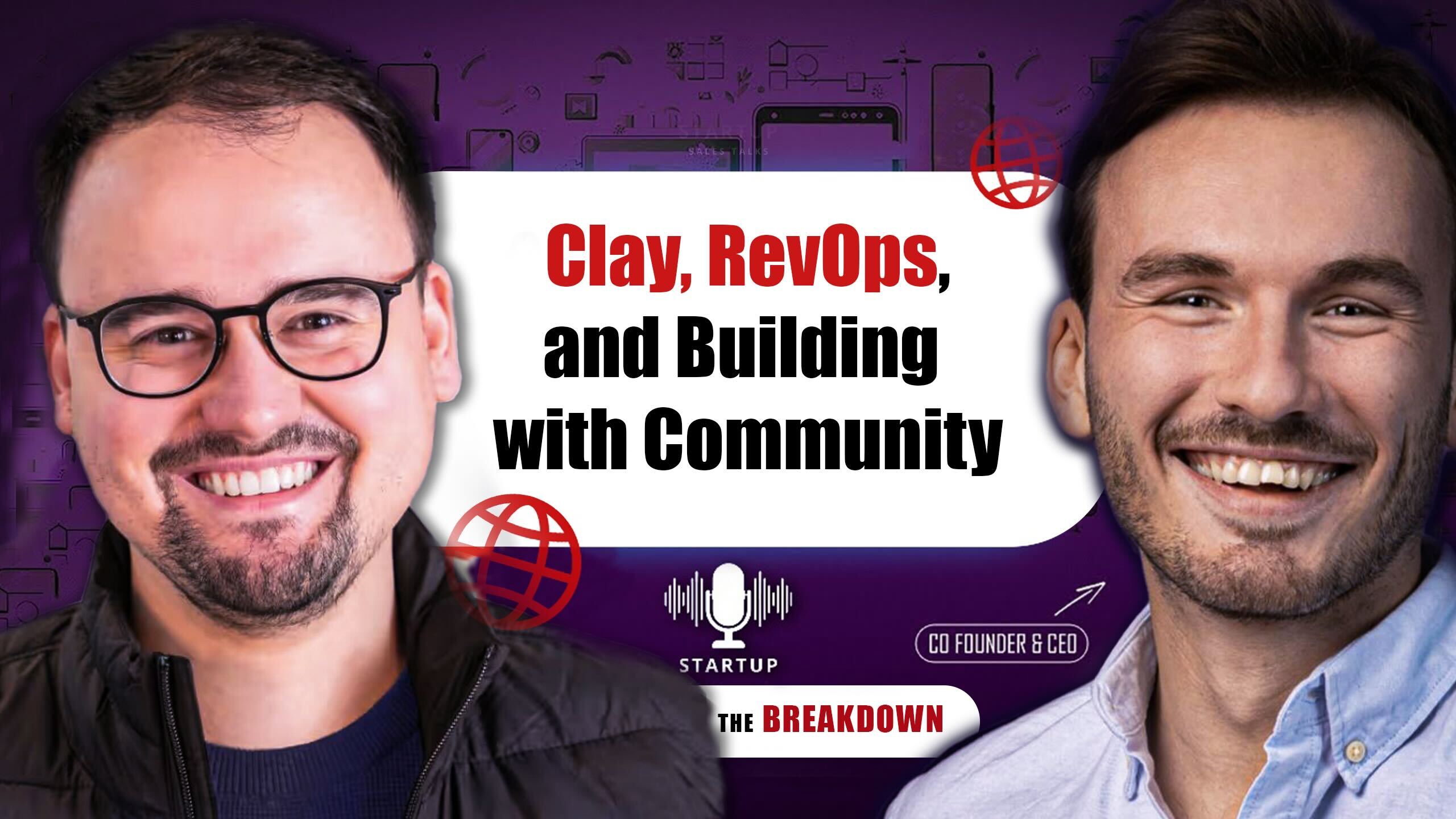
When you listen to Pawel Nical talk about his journey, one sentence keeps coming back.
“You just cannot give up.”
It sums up how he thinks about RevOps, about solo advisory, and about building community around tools like Clay. For Pawel, revenue operations is not a back office role. It is a strategic growth engine that only works if someone owns the messy middle between big plans and daily execution.
In this blog, we pull out Pawel Nical’s core ideas from his Startup Sales Talks episode and turn them into a practical playbook for founders, RevOps pros, and solo advisors.
From consultant to RevOps to solopreneur
Before anyone called it RevOps, Pawel was already doing the job.
He started in management consulting at BCG, moved into the startup world, and landed at a global SaaS company with more than fifty sellers across a dozen regions and no operations support. That gap became his opportunity.
“We had sellers in 12 regions and nobody connecting the dots. So leadership said lets build sales operations from scratch.”
That first mandate was classic sales ops. Forecasts. Reports. CRM hygiene. Yet Pawel quickly realised something was missing. Sales was getting support, but marketing, customer success, and leadership were still operating in their own lanes.
“We were contributing to one part of the business but the impact was limited. I knew we could do more if we stopped working in a silo.”
So when Pawel moved to an earlier stage company at seed stage, he wanted to build something broader. He was hired as Head of Growth, built a team he called growth management, and only later discovered that most of what he was doing had a name.
“I did not even know the term RevOps. At some point I realised eighty percent of what we do is revenue operations.”
Over three years he took that company from seed to series A to series B and through a private equity acquisition, building a RevOps team of nine along the way. Then he did something many people talk about but never do.
He walked away and went solo.
What RevOps actually is for Pawel Nical
Ask ten people what RevOps means and you will hear ten different answers. Pawel prefers to keep it simple.
“I see RevOps as a strategic growth function that connects revenue strategy with execution.”
In practice that means two things.
First, RevOps is end to end. It is not only about new business. Pawel is very direct on this.
“Growing a business is not just customer acquisition. You have current customers you can expand, retain, and build loops with. That is a gold mine.”
Second, RevOps is cross functional. It has to touch sales, marketing, customer success, and the data and systems that sit between them. For Pawel Nical, a RevOps function that sits under one team head is already broken.
“If RevOps reports to head of sales, they will focus ninety percent of their time on sales. You are recreating a silo and calling it RevOps.”
His rule is clear. Revenue operations should report to the same person as sales, marketing, and customer success. In early stage companies that usually means the founder.
That reporting line is not a political detail. It changes what RevOps can do. Under one team lead, RevOps becomes a ticket taker. Reporting to the top, RevOps becomes a sparring partner.
“Otherwise you end up as the person who updates custom fields in the CRM and puts out fires. That does not move revenue in a real way.”
Why founders should care about RevOps early
Many founders treat RevOps as something to think about after series B. Hire sales, ship features, get into a few accelerators, then worry about “operations”. Pawel thinks this is backwards.
He believes founders need a RevOps mindset from day one, even if they do not have a RevOps title in the company yet.
“Founders are the first sellers but they also should be the first RevOps people. They decide how all the dots connect.”
Those dots start with a full view of the customer journey. Pawel uses models like the bow tie funnel from Winning by Design, which maps revenue across awareness, education, selection, onboarding, expansion, and renewal.
The point is not the specific framework. It is the habit of seeing the whole picture.
“Every founder should know what dots exist in their business and how to connect them. That is where exponential growth comes from instead of only linear growth.”
For Pawel Nical, early RevOps work looks like this.
- Get a clear view of ideal customers across the full journey, not only at lead stage
- Define basic processes for how you attract, convert, onboard, and grow those customers
- Connect tools, data, and teams around that journey so people are not working in isolation
None of this requires a huge team. What it does require is a founder who accepts that “more outbound” or “more ads” is not a strategy.
The messy middle of going solo
Pawel’s ideas about leverage and resilience come from his own experience leaving a stable role to go solo.
After three years building RevOps inside a fast growing company, he stepped out as an independent advisor. The first months were rough.
“For three months I struggled to get recurring revenue. I had small gigs here and there but no repeatability. I did not know what income I would have next month.”
That uncertainty triggered doubts. Should he go back to a full time role. Was he in over his head. What kept him going were conversations with people who were a few years ahead in the same path.
“The message was simple. If you stay long enough in the game, you will start seeing results.”
Pawel took that advice seriously. He kept iterating his offer, building his personal brand, and having uncomfortable conversations. He has now changed his advisory offer seven times.
“I would say keep pivoting, keep moving on. Opportunities are out there, but you have to show up and discover where your strengths really are.”
Interestingly, his biggest pivot was not tactical. It was structural. For eight months he ran a lead generation agency with a co founder. It worked on paper. They had clients and projects. But it did not feel right.
“I realised I enjoyed solo advisory more. I am more of a relationship based person. I like go to market sparring partnerships with founders and executives.”
So he shut the agency down and went back to working under his own name, with more clarity on what he wanted his work to look like.
Clay, community, and why leverage is social
A turning point in Pawel Nical’s journey was discovering Clay and then being invited to launch Clay Club Warsaw.
First, Clay gave him a technical way to connect the dots that were missing in his RevOps stack.
“Clay was the missing piece for me. It lets me connect data, automations, and embedded AI into real workflows.”
Then Clay Club gave him a social way to connect with other people who care about the same problems.
The first meetup in Warsaw had about twenty five people in a small office. A year later he is hosting the seventh, co running events with HeyReach, and helping launch Clay clubs across Europe, including Clay Club Baltics with Dom.
“For me personally this journey was very enriching. I have met tens and hundreds of go to market builders who want to be hands on and strategic at the same time.”
The key for Pawel is that community is not a vanity metric. It is leverage.
Every Clay club brings together RevOps builders, sellers, marketers, and founders who are experimenting with similar tools and workflows. The result is a flywheel of shared knowledge and faster iteration for everyone involved.
“Connecting with a strong peer group makes a huge difference. Whether you are a founder, in a full time job, or a consultant, the right network accelerates everything.”
This belief is also behind his new project, RevTech Accelerator, a hybrid of mentorship, cohort learning, and practical support for RevOps and RevTech professionals who want to build high leverage advisory or agency businesses.
Pawel Nical’s RevOps toolkit in one sentence
If you condense everything Pawel shares about RevOps, advisory, and tools like Clay, you end up with something like this.
Get clear on who you serve, connect strategy to execution across the whole customer journey, build simple systems first, and surround yourself with people who are a few steps ahead so you do not give up before the compounding kicks in.
Or in his own words.
“Stay long enough in the game. Keep connecting the dots. That is how you turn RevOps from a support role into a real growth engine.”