Lirone Glikman: Turning human connection into a startup superpower
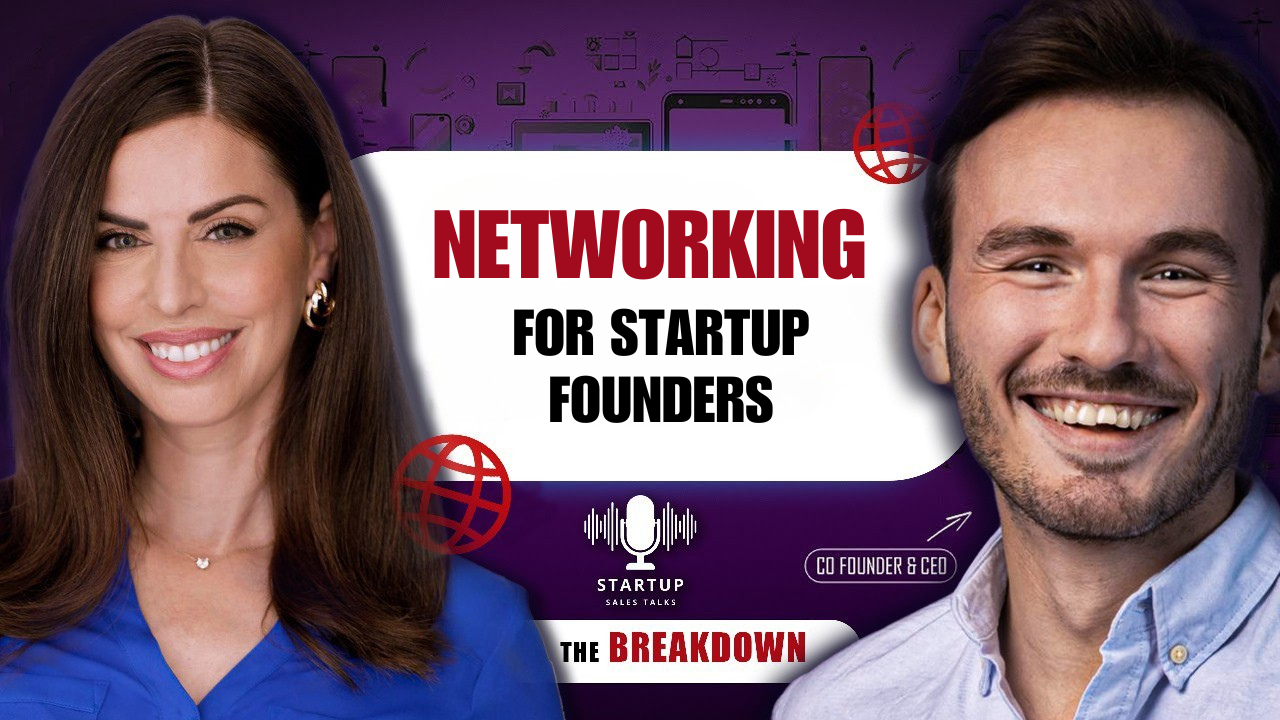
If you ask Lirone Glikman why founders struggle with networking, she doesn’t start with tactics. She starts with the truth most people hide.
“Ninety percent of people have some form of social anxiety,” she says.
“You’re not the only one who feels uncomfortable. The difference is how you deal with it.”
Lirone built her entire global career on that insight. She grew up in a small village, felt invisible, and learned step by step how meaningful relationships actually form. Years later she would become a global expert on business development and personal branding, advising companies like Microsoft, Google, Meta Accelerator and top startup programs around the world.
Her message to founders is simple. Networking isn’t a personality trait. It’s a system. And if you follow the system, you win.
The Six Phases That Make Relationships Work
Lirone breaks business relationships into six distinct phases.
The mistake founders make is skipping straight to the ask.
“Doors you don’t knock on won’t open. But knocking without connection won’t work either,” she says.
The first phases are strategic.
Define your goal. Map the people who can help you reach it. Build a personal brand that signals credibility before you ever reach out.
Only then do the interpersonal phases start.
The small talk that feels awkward at first.
The micro-moments of rapport.
The consistent follow-ups that most founders never do.
Authenticity is the engine. Strategy is the steering wheel.
The Power of the “90 List”
For founders who feel overwhelmed, Lirone offers one of her most famous methods: the 90 List.
A list of the 90 people who matter most — prospects, investors, mentors, partners, supporters.
Not 900.
Not everyone you ever met.
Just 90.
Every day you touch three of them. A comment, a message, a “this made me think of you,” a piece of value.
One month later, you’ve touched everyone once.
Three months later, the compounding starts.
“If you want clients, investors, partners — you must stay visible in a human way,” she says.
This is the opposite of spray-and-pray. It’s intentional, warm, human micro-connection. And it works.
Give First, Then Ask
Founders often hesitate to reach out because it feels transactional.
Lirone calls that a misunderstanding of how trust works.
“Be authentic and strategic at the same time. Start with value, then trust builds, then the ask becomes natural.”
She gives a striking example.
A startup she advised wanted Gary Vaynerchuk as an investor. Instead of cold outreach, they bought a ticket to a private bowling event, studied Gary’s world, prepared personal questions, and even took bowling lessons.
The founder won the game.
They connected deeply.
Gary invested.
It wasn’t manipulation. It was preparation meets authenticity.
Personal Brand as a Business Development Tool
Lirone doesn’t see personal branding as ego. She sees it as infrastructure.
“If you don’t tell your story, Google or ChatGPT will tell it for you. And they’re not on your side,” she warns.
She teaches founders to use simple LinkedIn formats to build credibility:
their own stories, their opinions on industry trends, reflections from conferences, amplification of others.
This creates familiarity.
Familiarity becomes trust.
Trust becomes opportunity.
In her words, “Authenticity is now a competitive advantage. Most posts online aren’t human anymore.”
Overcoming the Fear of the Room
Even Lirone, after years on global stages, feels sparks of anxiety.
The difference is her relationship to it.
Instead of seeing fear as a signal to withdraw, she reframes it.
“It’s excitement. It means you care.”
She teaches founders to use micro-behavioral psychology:
the first few seconds are uncomfortable, but once oxytocin kicks in, the conversation gets easier; having a wingman removes pressure; preparing three versions of your intro builds control.
Her message resonates especially with technical founders: you don’t need to be extroverted, you just need a process.
Why Big Brands Say Yes to Small Startups
Founders often assume they’re too small for global companies.
Lirone disagrees completely.
“Big brands work with small teams when there’s trust, clarity, and value up front,” she says.
Sometimes the value is expertise.
Sometimes it’s a fresh perspective.
Sometimes it’s simply caring more than the competitor and maintaining the relationship long enough for timing to align.
People move companies.
Relationships follow people.
The founder who understands this compounds opportunity for years.
The Human Factor in a World of AI
AI helps with research, drafts, planning — but Lirone is firm on one point:
AI can’t replace the feeling people get when you genuinely care.
As she puts it:
“Networking becomes even more powerful in the AI era because trust becomes the rarest resource.”
If you can create trust at scale — online and offline — you build a moat no algorithm can replicate.