Kotryna Kurt: LinkedIn Sales Strategy, Tactics, and Must-Have Tools for Startups
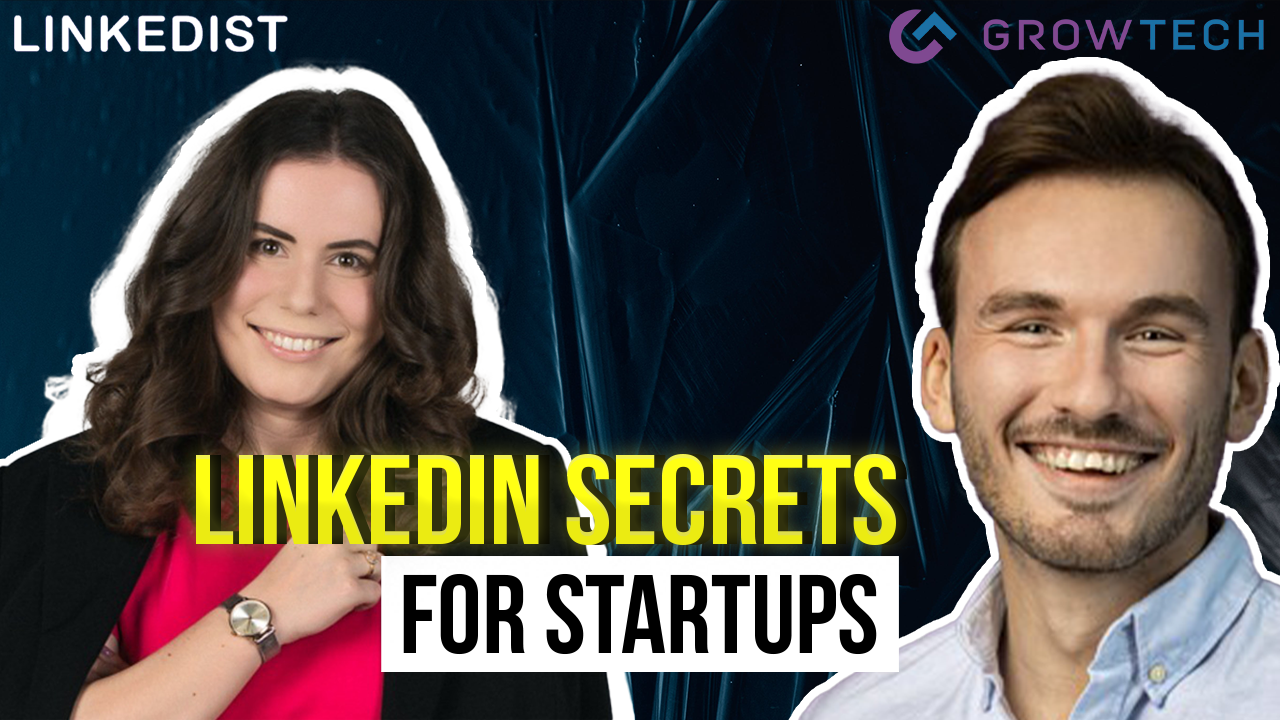
LinkedIn Sales Strategy, Tactics, and Must Have Tools for Startups with Linkedist Founder and chief executive officer Kotryna Kurt
In this episode of Startup Sales Talks, we sit down with Kotryna Kurt, founder and chief executive officer of Linkedist, a consulting agency fully focused on LinkedIn strategies for marketing, sales, and personal branding.
Kotryna has built her reputation as one of the go to voices on LinkedIn in Europe. She has delivered more than four hundred workshops, mentored founders through accelerators like Startup Wise Guys, Swiss EP, and Tenity, and spoken at events such as TechBBQ, TechChill, Login, Growth Marketing Conference San Francisco, and Sales Formula. Her clients range from early stage startups to global brands such as LEGO, Accenture, and Danske Bank.
In this conversation we unpack how startups should think about LinkedIn in twenty twenty four, which strategies actually move the needle, which mistakes to avoid, and what the future of selling on LinkedIn might look like.
From marketing and sales teams to founding Linkedist
Kotryna’s story started inside companies, not agencies. She was working in marketing, while at the same time helping internal sales teams with lead generation through content. Long before “personal branding” became a buzzword, she was coaching colleagues on how to create content that attracts leads.
At that time, very few people treated LinkedIn as a serious sales channel. For many, it was simply an online CV. As she experimented with posts, engaged with the platform, and saw how it helped sales teams book meetings, other people began asking for help. First came consultations, then requests to review processes, funnels, and content.
It was a classic demand driven origin story. The questions and inbound demand simply kept coming. Together with her previous co founder she decided to turn this niche into a focused business. That decision became Linkedist, a consulting company specialised in helping founders, sales leaders, and teams unlock LinkedIn for sales, advertising, and brand building.
Why sales feels different today?
Even though Linkedist grew out of marketing, Kotryna’s daily work is deeply tied to sales. She points out that whenever you start a company, regardless of your official title, you become the first salesperson and the first marketing hire at the same time. You are the one going to networking events, pitching, following up, closing initial deals, and creating the first wave of content.
To strengthen her skills, she even completed a master’s degree in sales management at Copenhagen Business School, one of the very few specialised programs in Europe. While building her agency, she used the degree to explore cold outreach, sales strategy, and process design in more depth.
She also notes that the perception of sales is slowly changing. Traditionally, sales was seen as pushy, transactional, and even annoying. Door to door culture and high pressure tactics did not create a positive image. Today, companies are waking up to the reality that sales is the lifeblood of any business and that modern selling requires far more strategy, warm up, and multi channel thinking than simply knocking on doors.
Universities have started to react. Even in Lithuania, institutions such as KTU are experimenting with sales courses and working toward full programs. Revenue operations and sales operations have become attractive career paths. Sales is finally being treated as a strategic discipline rather than a fallback job.
The 3 core LinkedIn sales strategies for startups
When founders ask how to use LinkedIn for sales, Kotryna breaks it down into three broad strategies that can be mixed together.
The first is paid media. If a company has budget and needs reach quickly, LinkedIn ads can get you in front of the right titles and accounts without too much complexity. However, she is direct about the limitation. Many startups simply do not have the capital to sustain serious paid campaigns on LinkedIn, and for them paid ads alone are not a realistic growth strategy.
The second is content driven inbound. This is where a founder or sales leader builds a consistent presence by sharing content that educates, tells stories, and shows how they think. It is rarely instant, but over time it turns the profile into a magnet for opportunities. Another important piece here is engagement. Posting alone is not enough. Leaving thoughtful comments, writing direct messages, and connecting with relevant people accelerates the process. For startups thinking long term, this is the foundation that keeps paying off.
The third is structured outreach. Using tools like sales navigator or other third party platforms, you search for your ideal buyers and reach out directly. This is the most immediate route to leads if you do it with care and personalisation. Messaging can be tested and iterated quickly. If you need conversations next week rather than next quarter, this is the lever to pull.
Most successful teams do not choose one of these strategies in isolation. They combine all three in a way that fits their stage and resources.
Addressing the classic founder objection about content
Almost every founder says the same thing. They do not have time to post on LinkedIn. Between product, fundraising, hiring, and operations, content feels like a luxury.
Kotryna’s answer has two parts.
First, the platform becomes easier to use once your own feed inspires you. If your newsfeed is full of random noise and irrelevant posts, you will not feel like contributing. So the first step is to clean it up, follow people who speak about topics you care about, and build a feed that actually teaches you something. Inspiration makes it much easier to start posting.
Second, there are tools that lower the friction. She mentions Taplio as one example, which helps with content ideas, shows viral posts by topic, and can even generate draft posts. Linkedist is also building its own GPT model called Ava, designed specifically to help users generate LinkedIn post ideas. The message is simple. If you truly cannot do everything manually, you can still stay active with the help of software and a light workflow.
Real outcomes when you show up consistently
LinkedIn can feel slow at the beginning, especially if you are posting to a small audience. Kotryna shares several stories to remind founders what is possible when they stay consistent.
One client who started posting seriously was invited to deliver a TEDx talk in Lithuania just a few months later. Another was invited to Davos during the World Economic Forum. Others have received direct inbound leads, filled contact forms through company pages, or been pulled into high level discussions simply because of one well placed comment that caught the eye of a senior decision maker.
Her philosophy is simple. The more ripples you create, the more likely something important will happen. Posts, comments, connection requests, and smart outreach all create surface area for luck to find you. You cannot always predict which specific action will result in a client or opportunity, but you can control how active you are.
Common mistakes companies make on LinkedIn
One of the biggest content mistakes she sees is being too direct and aggressive with selling. LinkedIn users are typically experienced professionals. They recognise a hard pitch immediately and do not reward it with engagement. Pure promotional posts often disappear without reach.
Good sales content does something different. It tells a story, explains a problem, shares a behind the scenes lesson, or gives a practical framework, and only then naturally leads toward your solution. When the copy is genuinely interesting, it sells for you without sounding like a brochure.
Another major mistake happens in direct outreach. Many people still send copy pasted messages that pitch services in the very first touch, without any understanding of whether the person needs that solution. Ironically, even Kotryna regularly receives automated messages offering LinkedIn optimisation or LinkedIn courses, despite the fact that this is exactly what her agency does. It is a perfect example of lazy targeting.
The lesson is clear. Automation is useful, but only if you still think carefully about the message, the targeting, and whether your first interaction respects the other person.
On automation, volume, and the risk of LinkedIn prison
Kotryna is not against automation. Quite the opposite. She believes automation and AI can remove repetitive tasks and give salespeople more time for real conversations. Tools that help you follow up after events, send thank you messages, or manage sequences can be powerful when they are combined with smart strategy.
At the same time, both of us note the limit. Overusing automation, blasting too many messages, or ignoring platform rules can result in restrictions. The informal term for this is “LinkedIn prison,” where your account ends up limited and outreach becomes impossible for a period of time.
The practical advice is to stay conservative with volume, personalise where it matters, and remember that quality beats quantity in the long run.
Adapting LinkedIn strategy to different industries
Not every industry lives on LinkedIn in the same way. In some segments such as software and marketing, almost every decision maker is present and active. In more traditional markets such as certain parts of real estate or medical sectors, your direct buyers may not be visible at all.
Kotryna suggests starting with a basic reality check. Use search to understand how many of your ideal buyers are actually on the platform and how active they are. If they are not there, LinkedIn might still be useful to reach influencers inside those organisations rather than final decision makers.
She also recommends a hybrid approach when working with conservative industries. Use LinkedIn to connect with people who attend the same conferences and events, then push toward meeting in person. Even if senior executives are not on the platform, their teams often are. Those internal champions can be your bridge to the real buyer.
Influencers and paid partnerships on LinkedIn
Paid sponsorship posts are already common in other networks, and LinkedIn is moving in the same direction. A visible sign of this is the paid partnership tag that is starting to appear on posts in some regions, similar to Instagram.
Kotryna’s view is pragmatic. If an expert has built an audience that trusts their opinion on a specific topic, partnering with them can be a powerful way to reach a focused group. The key is authenticity. It only works long term if the influencer genuinely uses or believes in the product.
She mentions a finance creator who charges five figure fees for a single sponsored post and has seen individual posts reach more than one million views. For a tool targeting finance professionals, that type of campaign can be more efficient than broad, untargeted advertising.
New and upcoming LinkedIn features to watch
LinkedIn has been steadily expanding its analytics. Profile view data, audience breakdowns, and post performance stats are becoming richer, which helps both sellers and marketers refine their approach.
The platform is also experimenting with integrated AI features. Some are aimed at recruitment and interviews, while others will likely arrive in sales products such as sales navigator. The direction is clear. LinkedIn wants to help users hire faster and sell faster by embedding intelligence into existing workflows.
Best practices for startup sales teams on LinkedIn
When thinking about teams rather than solo founders, the question becomes how to align multiple people around a shared playbook.
Kotryna recommends treating LinkedIn as one channel in a multichannel approach, alongside email and other touchpoints. On the platform itself, using sales navigator team features or a shared outreach tool can help centralise efforts. Seeing what messages colleagues are using, which ones convert, and which segments respond best allows the team to learn together rather than in isolation.
She also encourages teams to promote each other’s content. When colleagues comment on or reshare posts from the company page or from a founder’s profile, reach increases significantly. Over time, this makes the entire company more visible to prospects.
Where LinkedIn sales may be heading
Looking further ahead, Kotryna expects personalisation to become both more important and more difficult. As AI tools get better at generating copy, the volume of low quality outreach and content will rise. That will make buyers even more selective and sceptical.
In that environment, simply having a message will not be enough. Salespeople will need to show real understanding of the prospect’s context and prove that they are not just letting a bot speak for them.
She even imagines a future in which AI sales assistants handle the earliest stage of interactions. Agents might qualify basic needs, gather context, and then route opportunities to human sales managers who continue the conversation at a deeper level. In some ways this is already starting to happen through call summaries, automated research, and intent data. LinkedIn sits at the centre of that ecosystem because so much professional information lives there.
How Kotryna keeps learning and stays sharp
To stay on top of her game, Kotryna mixes different learning sources. She listens to podcasts about startups, business development, and the wider tech ecosystem. She follows people on LinkedIn and other platforms who are ahead of her in experience and results.
When it comes to books, she highlights two that have shaped her thinking. Ego is the Enemy by Ryan Holiday, which explores how ego can sabotage progress and relationships, and The CEO Next Door, a book she rereads regularly because of its insights into leadership behaviour and decision making.
For her, working in sales and running an agency is as much about self management and mindset as it is about techniques.
A simple philosophy for selling
Sales can be mentally heavy. Long cycles, constant rejection, missed targets, and pressure all add up. When asked about her philosophy, Kotryna emphasises two behaviours.
The first is listening. Too many salespeople talk more than their prospects. She tries to slow down, listen carefully, and pick up the words and themes the other person uses. Sometimes the real opportunity is not what you initially planned to pitch. Listening reveals where you can genuinely help, which in turn builds trust.
The second is being like a chameleon. In the first minutes of a call she pays attention to energy, tone, and communication style. Some buyers are direct and efficient. Others prefer to talk about personal topics before diving into business. Matching that style, without faking it, makes conversations smoother and increases the chance of reaching an agreement.
Combined, these two habits make selling feel more human and less like a script.
Closing thoughts
LinkedIn is no longer just an online CV platform. It is a central place where modern B2B relationships begin. For startups, it can be a core sales channel, a brand engine, and a source of unexpected opportunities if used with intention.
Through Linkedist, Kotryna Kurt has helped founders and teams treat LinkedIn as a serious part of their go to market strategy rather than an afterthought. Her message is clear. Clean up your feed. Show up with content. Use tools intelligently. Respect personalisation. Combine outreach, content, and events. And remember that every comment, post, and message is one more ripple that can lead to your next client.
If you want to turn LinkedIn into a reliable growth engine for your startup, GrowTech is ready to help you build the strategy and systems to make it happen.