Kotryna Kurt on LinkedIn Sales Strategy, Tactics and Tools For Startups
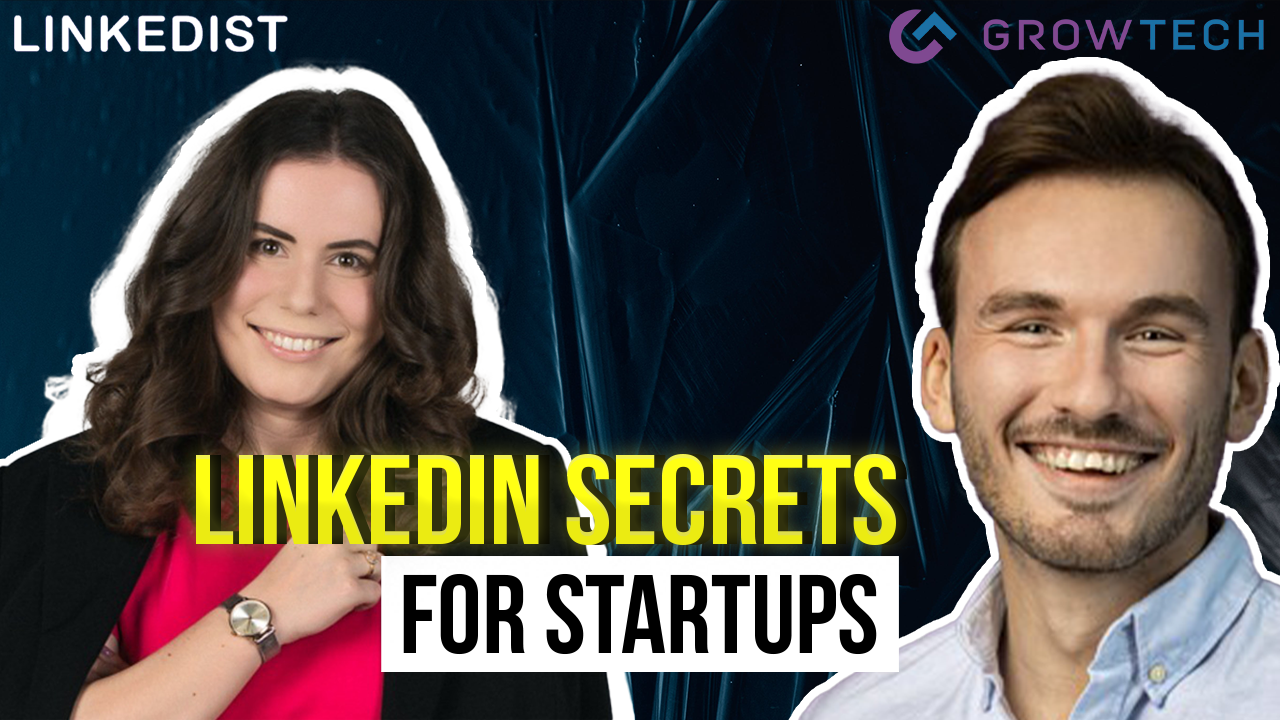
These days sales is not about kicking in doors and blasting cold pitches. It is about strategy, warm up, touchpoints and smart use of channels. That is how Kotryna Kurt, Founder and CEO of Linkedist, sees it.
On Startup Sales Talks episode 4, Kotryna joins Dom Urniežius to break down how startups can actually use LinkedIn for sales, not just as a place to park a fancy job title.
She puts it simply
“These days sales requires much more strategy, much more warm up. There are so many more channels and touchpoints. You have to be really smart about it instead of just going to somebody and knocking on the door.”
From curious marketer to LinkedIn agency founder
Kotryna did not set out to start a LinkedIn agency. It happened by demand.
She began in marketing, working closely with sales teams, coaching them on lead generation through content. This was seven or eight years ago, before personal branding on LinkedIn was a common phrase and long before everyone had a carousel in their feed.
While experimenting on her own profile she saw LinkedIn’s potential. She treated it as the largest professional network in the world and started posting consistently. People noticed. Then the questions came.
Can you look at my profile
Can you help with our content
Can you review our sales process on LinkedIn
That demand became Linkedist. She and her co founder chose the niche deliberately. LinkedIn only. B2B. Strategy, content and sales.
Along the way she went deeper into sales itself. While building the agency she took a master degree in Sales Management at Copenhagen Business School one of the few dedicated sales programs in Europe. She wanted structure, tactics and a stronger foundation to support clients and her own business.
“Even if you are starting a marketing business you are still the salesperson. You are the one going to events, selling, doing outreach. I wanted real sales knowledge to back what I was doing.”
Three main LinkedIn sales strategies for startups
Ask a founder about LinkedIn and you usually hear one of two answers
I do not have time
It does nothing for sales
Kotyrna hears this every week. Her answer is to keep it simple and pick a clear strategy.
She breaks LinkedIn sales for startups into three main approaches.
1- Paid ads
If you have capital and want reach fast, LinkedIn ads are the direct route.
You run sponsored content, lead gen forms, maybe retargeting.
It is straightforward but expensive. And for most early stage startups, not realistic as a main channel.
“If you have a lot of budget and want to reach your audience without a lot of hustle, put money into LinkedIn ads. But I would not recommend it as the first step for most startups.”
2- Content creation
Content is the long game. It is inbound behavior.
You show up with posts, comments, and a strong profile. You build your brand and create a consistent presence in front of your ideal buyers.
Content does a few things at once
It warms prospects before you ever message them
It positions the founder and sales team as experts
It creates surface area for luck invitations, podcast slots, speaking gigs, unexpected intros
Kotryna shares examples
A client started posting and within three months got invited to speak at TEDx in Lithuania
Another client was invited to Davos during World Economic Forum after their content started circulating
A simple comment under someone else’s post led to a high profile investor sliding into the DMs
Her philosophy here
“The more ripples you make in the water, the more things start to happen. You never know if it will be a client, a speaking invitation or a closed community event. But nothing happens if you stay silent.”
Content is not always instant pipeline, but it builds the environment where sales become easier and warmer.
3- Cold outreach
If you need leads now tomorrow next week you cannot wait for inbound.
That is where targeted cold outreach comes in, using Sales Navigator or third party tools and a smart sequenced message strategy.
Cold outreach is still one of the fastest ways to test messaging, iterate and understand what actually resonates with your market. Done right, it complements content perfectly.
As Kotryna puts it
“If you need leads for the next day, do cold outreach. But it still requires effort and personalization. Automation alone will not save you.”
The ideal for most startups is a mix
Content for trust and awareness
Outreach for direct pipeline
Paid for amplification once there is budget and proof
How founders can create content without burning out?
Founders love to say they have no time for content. Kotryna hears the excuse but does not buy it fully. She offers a practical way to make it lighter.
First clean your feed.
If your LinkedIn feed is full of random updates and boring news, you will never feel inspired to post.
Curate aggressively
Follow people who post about topics you care about
Engage with creators in your industry
Remove connections that add noise
“If your newsfeed is not interesting you will not want to post yourself. First fix your own environment.”
Then use tools, not as a crutch but as support.
She mentions
Taplio for post inspiration and scheduling
Linkedist ebooks with content ideas and frameworks
Linkedist’s upcoming GPT model called Ava that will generate draft LinkedIn posts for you
The message is clear use tools to speed up ideation but always run your own content through a human filter so it feels like you.
The biggest mistakes founders and sales teams make on LinkedIn
Kotryna sees the same errors over and over.
Being too salesy in posts
If every post screams buy my tool nobody engages.
LinkedIn users are sharp. They can smell a pitch immediately.
“If they see you are just promoting something, they will not engage. A good sales post is a story or a useful insight that sells for you without you sounding like a banner ad.”
Educational content. Case stories. Opinion pieces. These sell indirectly and build trust.
Cold pitching in the first message
Sending a connection request and immediately pitching is a fast way to ruin your reputation.
She laughs about getting weekly messages offering LinkedIn profile optimization and LinkedIn courses from people who never even check what she does.
“If your first message is your product, you already lost. You do not know if they need it, and sometimes it even makes you look ridiculous.”
Blind automation
Kotryna likes automation and is not romantic about manual work. But she draws a hard line.
If you use automation without a strategy and without editing the default messages, you just scale stupidity.
Good use of automation
Follow up after events
Sending event thank you messages
Light, personalized first touches to a refined list
Bad use
Same generic pitch to everyone
No segmentation by persona or industry
Obvious copy paste that ignores the other person’s role
Dom adds a practical warning from his own scars keep daily connection and message volumes low enough so you do not end up in what he calls LinkedIn prison.
Adapting strategy by vertical and industry
Not every buyer lives on LinkedIn eight hours a day. Selling to a CMO at a software company is very different from selling into real estate or medical sectors.
Kotryna’s approach
First measure how present your audience is on LinkedIn. Use search and filters to see if your decision makers and influencers even exist there in meaningful numbers.
If they do not, LinkedIn becomes a support channel rather than the main one.
In conservative industries where C level leaders are rarely present you can
Connect with middle management and influencers
Use LinkedIn to find and then meet people at conferences and industry events
Combine online touchpoints with real world meetings
“Sometimes the main decision makers are not active on LinkedIn, but the people who influence them are there. Build relationships with those influencers and they can open doors.”
Team based LinkedIn selling for startups
When more than one person sells, things get messy fast.
Kotryna recommends that startup sales teams treat LinkedIn as a coordinated system, not just a bunch of individuals spamming.
Her best practices
Use Sales Navigator Team or an outreach CRM so you can see who is working which accounts
Run shared experiments with messaging and measure what gets replies
Align profiles and positioning so the whole team looks like one story, not ten random freelancers
Encourage internal reshares and engagement to boost reach of key posts
Dom adds that simple things like colleagues resharing your best content can dramatically expand impressions without extra work.
And all of this should sit inside a multichannel outbound strategy where LinkedIn and email and other channels support each other.
The future of LinkedIn and sales
Where is this all going
Kotryna sees a few clear trends
More analytics LinkedIn is finally catching up with richer profile and content stats
More AI integrating into Jobs, Sales Navigator and content workflows
More noise and more bad messages driven by easy automation
Because of that, personalization and quality will become even more valuable.
“With every new tool there is more rubbish. More fake messages. We will have to work even harder to stand out with real personalization and real understanding of the buyer.”
She even imagines a possible future where AI sales assistants talk to each other first, triage issues and then hand over to human sales managers when it gets serious.
Whatever happens, attention and trust will remain the ultimate currency.
How Kotryna keeps learning and stays sharp?
To stay on top of her game she mixes daily information with deeper books.
Podcasts like The Best One Yet for a quick rundown on startups, sales and markets
Books she highly recommends
Ego Is the Enemy by Ryan Holiday for keeping your ego in check and staying grounded in sales and leadership
The CEO Next Door for founders and sales leaders who want to understand what real leadership patterns look like in high performance companies
She also follows people on LinkedIn and Twitter who are further along in their careers and uses them as a source of motivation and new ideas.
Kotryna’s core sales philosophy listen and be a chameleon
At the end of the day, her philosophy is simple.
Listen more than you talk. Then adapt.
“Salespeople often talk more than their leads. That is never a good strategy. Listen to what they say and what they do not say. Maybe right now you cannot sell your solution, but you can help with something else and build trust.”
She treats herself like a chameleon in the first minutes of a call. She reads the person. Are they direct Are they practical Do they want to connect personally first or jump straight into numbers
Then she adjusts her tone and pace to match them. Not to manipulate, but to make communication easier and reduce friction.
In Kotryna’s world, LinkedIn is not just a job board or a place to brag about promotions. It is a serious sales channel where
Content earns trust
Outreach starts conversations
Tools support, but never replace, strategy
And the startups that win will be the ones that treat it that way.